
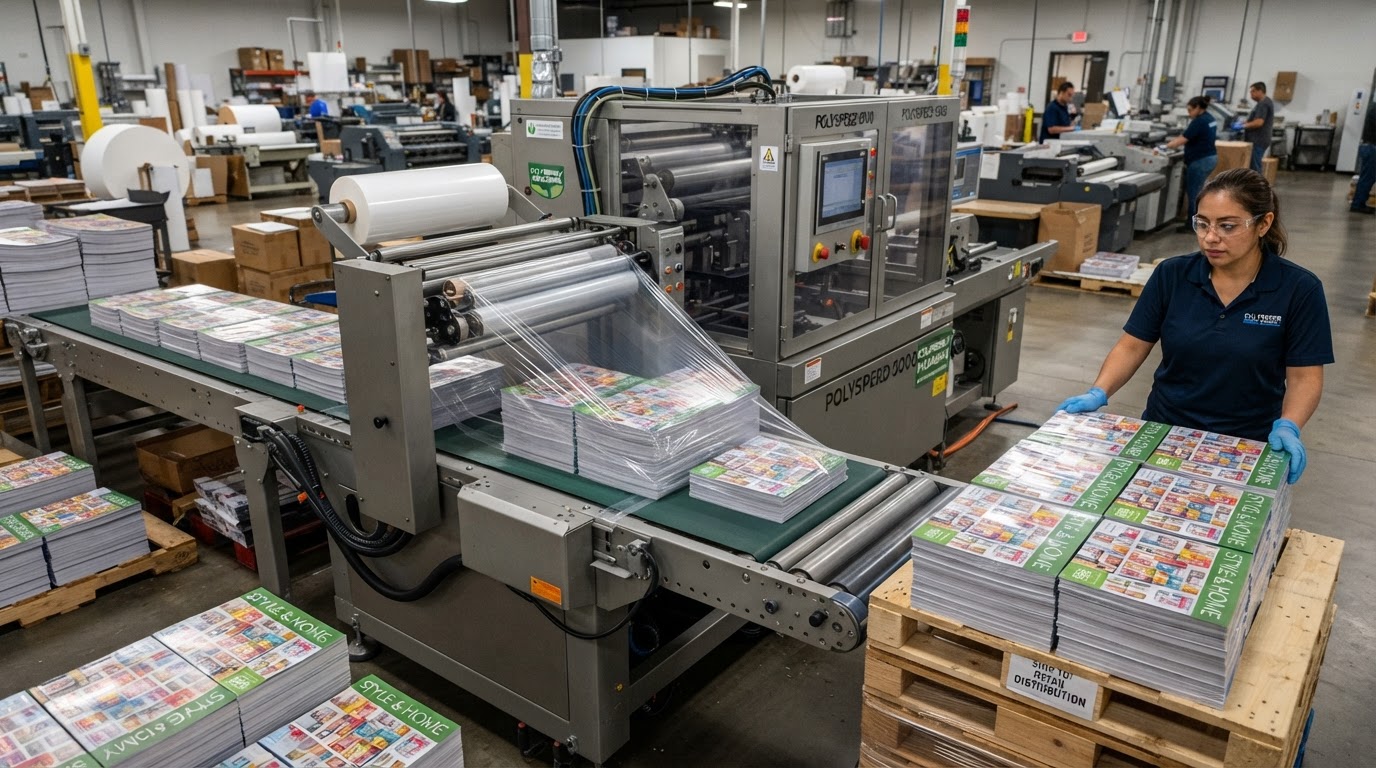
Catalog Printing & Polybagging: Protecting High-Page-Count Mailings
How retail and B2B brands combine catalog printing with polybagging and co-mailing for maximum delivery protection.
Catalogs drive substantial online and phone sales. Wrapping high-page-count catalogs in protective clear polybagging keeps covers pristine while allowing sample inserts or special discount coupons to be included inside the package. Far from being a relic, the printed catalog is one of the highest-ROI assets a retail or B2B brand can mail, because it lives in a home or office for weeks, drives digital and phone traffic long after the drop, and reaches customers that email and social never could. Producing and mailing it well, however, is a specialized discipline.
Why Catalogs Still Convert
A catalog is a physical browsing experience that no digital channel replicates. Recipients keep catalogs on coffee tables and desks, flipping through them over days or weeks, marking pages, and returning to items that caught their eye. The dwell time is extraordinary compared to a fleeting digital impression, and the format drives both direct catalog orders and downstream digital and phone traffic. For many brands, the catalog is the highest-revenue-per-piece mail they send, and the data consistently shows that catalog mailers also lift digital sales among recipients.
Paper, Binding, and Page-Count Decisions
Catalog production involves binding, paper, and page-count decisions that affect both cost and deliverability:
- **Saddle-stitch binding:** Economical for lower page counts; staples along the spine.
- **Perfect binding:** Square spine, glued; professional look for higher page counts.
- **Paper weight:** Lighter interior stocks keep postage down; heavier covers protect the catalog in transit.
- **Page count:** Must be a multiple of the signature (typically 4 or 8 pages) to bind cleanly.
The combination of these decisions drives both the production cost and the postal classification. A heavier, thicker catalog may move as a parcel or flat at different rates, and oversized or overweight pieces can trigger surcharges. Design the catalog with the postal rules in mind from the start, not after the print run is planned.
Polybagging for Protection and Inserts
Polybagging wraps the catalog in a protective clear film that keeps the cover pristine through postal handling. The polybag also creates a pocket for inserts — a discount coupon, a sample, a bounce-back offer — without binding them into the catalog itself. For co-mailed catalogs, the polybag is where each client's inserts ride along with the shared catalog, which is the basis of co-mail economics. Polybagging adds cost, but it dramatically reduces damage complaints and increases the deliverable value of the drop.
Co-Mail for Catalog Volume
Co-mailing combines multiple catalogs into a single mailstream to deepen the postal presort and lower postage per piece. Because catalogs are high-page-count and heavier, the per-piece postage savings from co-mail are substantial, and co-mail is often the difference between a catalog program that scales and one that is too expensive to send. Work with a catalog mailer that participates in co-mail pools, and confirm the co-mail calendar aligns with your in-home targets.
Insert Strategy and Catalog Riders
Inserts inside a polybagged catalog are a high-value medium in their own right. A coupon insert can drive immediate response; a sample insert can drive trial; a bounce-back can drive a second interaction. Because the insert rides with a piece the recipient already values, it is seen and used at a high rate. Plan the insert strategy as part of the catalog design, not as an afterthought, because the insert often produces the strongest measurable response of the whole drop.
Induction and Postal Logistics for Catalogs
Catalogs are heavy and bulky, which makes the induction logistics distinct from letter mail. Catalog mailers use freight and drop shipping to move completed catalogs to destination facilities, and the same destination-entry savings that apply to letter mail apply even more strongly to catalog weight. The right drop strategy — consolidated freight, SCF or DDU drop, co-mail — can cut catalog postage dramatically. Confirm the destination-entry economics with your mailer for each drop, because the savings are real and large.
Measuring Catalog Performance
Catalog attribution is a mix of direct response (orders from catalog-specific codes and numbers) and matchback (attributing downstream digital and phone orders to catalog recipients by address). Because catalogs drive multi-channel response, matchback is essential — without it, the catalog appears to underperform because much of the revenue it drives surfaces in other channels. Measure catalog recipients against a held-out control group to isolate the lift, and use the result to decide page count, frequency, and audience for the next cycle.
Sustainability and Paper Choices
Catalogs are visible, physical artifacts, and paper choices signal brand values. Recycled stocks, certified papers, and lighter weights reduce environmental footprint and sometimes postage. Communicate the choices honestly without greenwashing, because the audience is increasingly attentive to it. A catalog produced responsibly and mailed efficiently can be both a high-ROI asset and a positive brand signal.
When a Catalog Is the Right Investment
Catalogs are not for every brand — they require volume, a product range that benefits from visual browsing, and the production discipline to execute well. For the brands where they fit, they are among the most profitable mail a marketing team can send, driving response and revenue that no digital channel matches. The decision is strategic: invest in a catalog when the product story and the audience reward physical browsing, and the catalog will pay back across every channel it touches.
Looking for Lettershop & Mail Insertion Services Providers?
Browse verified specialists providing lettershop & mail insertion services across North America.