
Cutting Direct Mail Postage Costs with Commingling & SCF Drop Shipping
How co-mailing, presorting, and destination entry drops unlock deep USPS postage discounts for high-volume campaigns.
Postage typically accounts for 40% to 60% of a direct mail campaign's total budget. Strategic postal logistics minimize postage expenses without sacrificing delivery speed. The three levers — presorting, commingling, and destination entry drop shipping — each reduce the work the USPS would otherwise do on your behalf, and the USPS rewards that work with lower per-piece rates. Understanding how they work together is the foundation of a cost-efficient mail program.
Mail Commingling Explained
Commingling combines smaller mailings from multiple clients into a single high-volume mail stream sorted down to 5-digit zip codes. By delivering presorted mail directly to USPS facilities, mailers qualify for maximum automation postage discounts. Commingling is what makes small and mid-volume mailers competitive on postage: a 5,000-piece drop alone may not reach the 5-digit presort thresholds that unlock the deepest discounts, but the same 5,000 pieces commingled with other mail easily does.
The commingling process sorts each piece by destination, trays the mail to the required destination level, and applies the correct postage based on the depth of sort achieved. The per-piece savings from commingling can be substantial, and because commingling is a standard lettershop service, the operational complexity is invisible to the mailer.
Presort Depth and Postage Tiers
USPS postage rates are tiered by how deeply the mail is sorted before induction:
- **5-digit presort:** All pieces in the tray share the same first 5 digits of the ZIP code — the deepest sort and the lowest rate.
- **3-digit presort:** Pieces share the first 3 digits of the ZIP — the Sectional Center Facility (SCF) level.
- **ADC / Origin-based tiers:** Coarser sorts for mail that cannot reach deeper thresholds.
Every additional level of sort depth you achieve lowers your postage. Commingling drives more pieces into the 5-digit and 3-digit tiers than a single mailer's drop typically could, which is why commingled mail costs less to send.
Destination SCF & DDU Drop Shipping
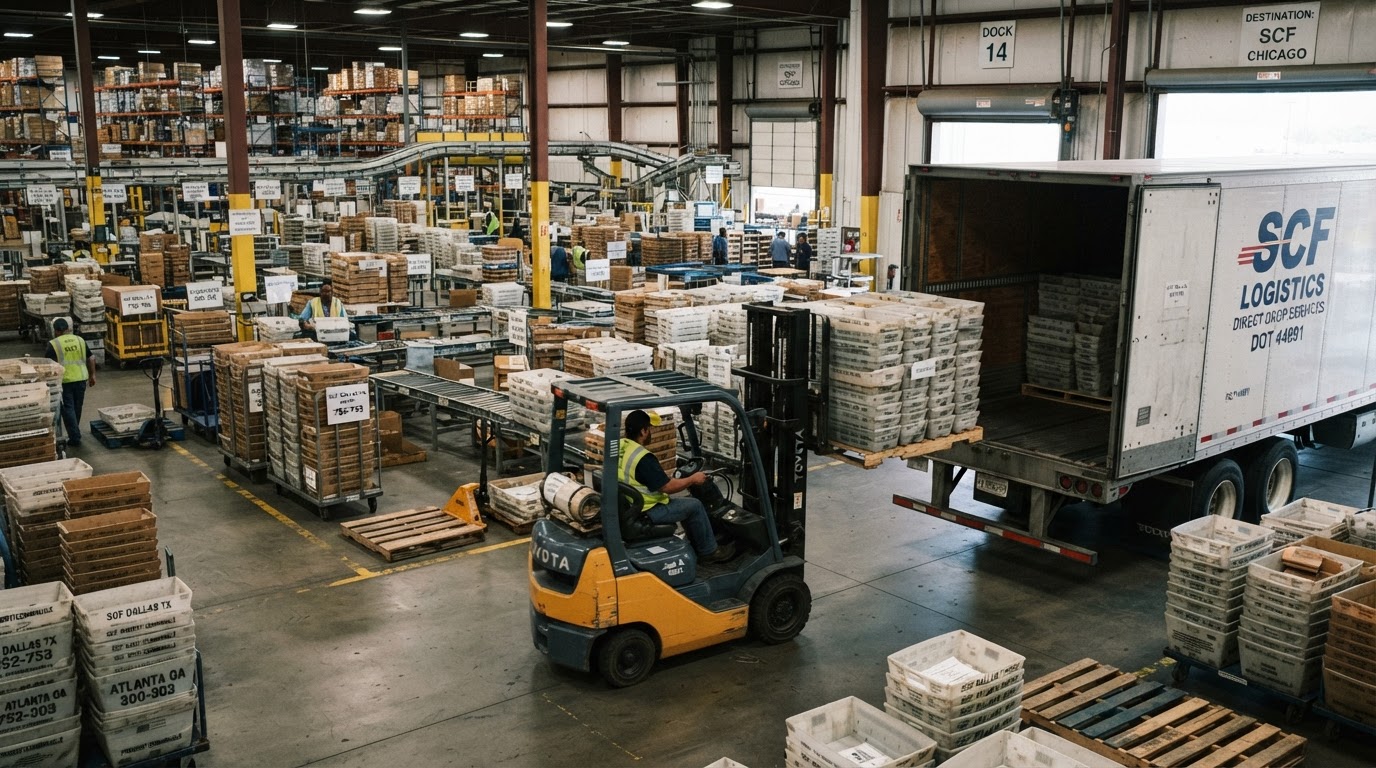
Bypassing local origin post offices by freight-trucking mail directly to Sectional Center Facilities (SCF) or Destination Delivery Units (DDU) saves postage costs per piece while shortening in-home delivery times by 2 to 4 days. Drop shipping is the second lever: by doing the transportation work yourself, you qualify for destination entry discounts on top of the presort discounts.
The trade-off is logistics cost. Drop shipping requires trucking or freight to the destination facility, and the savings must exceed the freight cost to be worthwhile. For high-volume drops concentrated in a few destinations, the math usually works; for low-volume, widely dispersed drops, it often does not. Your postal logistics partner can run the numbers for each drop and tell you exactly where drop shipping pays.
Mixed Techniques for Maximum Savings
The highest savings come from stacking the levers: presort the mail, commingle to deepen the sort, and drop ship to the destination. A 50,000-piece Marketing Mail drop that is presorted, commingled, and DDU drop-shipped can cost a fraction per piece of the same drop mailed at full rate. The techniques are not mutually exclusive — they are complementary, and a sophisticated mailer applies all three where the volume and geography support them.
Marketing Mail vs. First Class
Most promotional direct mail qualifies for USPS Marketing Mail (formerly Standard Mail) rates, which are significantly lower than First Class but carry longer delivery standards and content restrictions (no personal or time-sensitive material). First Class is appropriate for statements, bills, time-sensitive offers, and any content the USPS classifies as personal. Choosing the right class is the first savings decision; getting it wrong either wastes money (using First Class for a promotion) or risks non-compliance (using Marketing Mail for bill delivery).
In-Home Timing and Planning
Lower postage can mean longer in-home windows. Marketing Mail delivery is not guaranteed on a specific day, and drop shipping can shift timing in either direction depending on the destination. For time-sensitive campaigns — sales, event invitations, political GOTV — plan around expected in-home windows and build in buffer. Your mailer should be able to estimate the in-home curve for your drop based on the destination mix and the techniques applied.
Auditing Postage
Reputable mailers provide postage statements that show the sort depth achieved and the per-piece rate applied. Audit these against the quoted rates, and ask about any variances. A good mailer is transparent about the actual presort performance and the resulting postage, because their value is in delivering real savings — not just volume processing.
Building a Postal Logistics Strategy
Over time, a mature mail program optimizes across all three levers: it routes volume through commingling to deepen sort, it drop ships where the math works, and it selects the right mail class for each campaign. The result is a lower cost per piece, faster in-home delivery where it matters, and a mail budget that scales efficiently as volume grows. The savings compound, and a disciplined postal logistics strategy is often the single biggest source of cost reduction available to a high-volume mailer.
Looking for Presort & Postal Rate Optimization Providers?
Browse verified specialists providing presort & postal rate optimization across North America.